Guadeloupe pledges two billion euros to fix a water system that loses half it treats
With a new leader at its troubled water authority, Guadeloupe says it is ready to move from diagnosis to action on a network so leaky that over half the treated water never reaches a tap.
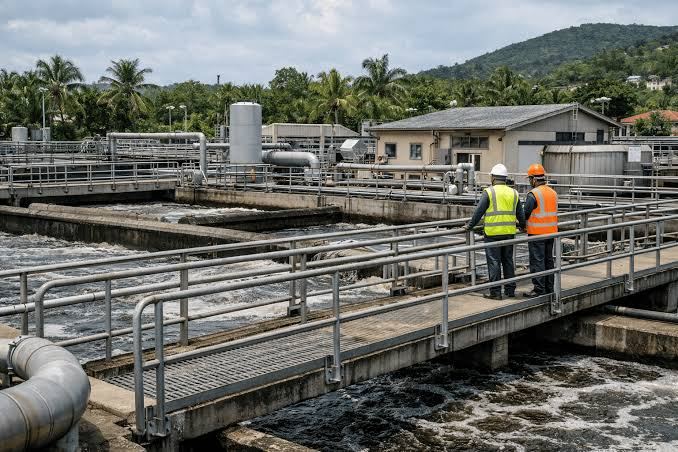
Guadeloupe's water crisis is the kind of slow emergency that rarely makes regional headlines and never stops mattering. For years, residents of the French Caribbean department have endured rotating cutoffs, tours d'eau, in which neighborhoods lose their supply for hours or days at a time, not because the island lacks rainfall but because the pipes that carry its water are so decayed that much of it leaks into the ground before it arrives. The authority responsible, the SMGEAG, has now elected a new president, Henri Yacou, and says it is ready to move from studying the problem to spending on it, according to Outre-mer La 1ere, the public broadcaster for the French overseas territories.
The headline commitment is a network-renewal program costed at roughly two billion euros. The scale of the task it addresses is startling. Figures aired at a water summit in June 2026, reported by RCI Guadeloupe, put the network's yield at around 45%, meaning that more than half of all treated water is lost to leaks before it reaches a customer. A regional audit office estimated in July 2025 that, at the pace renewal was then proceeding, fully replacing the island's pipes would take more than two hundred years. Ending the water rotations alone was estimated to require about 1.2 billion euros.

The authority's finances make the ambition harder. The same coverage put the unpaid-bill rate at 36%, more than a third of what is billed going uncollected, and the SMGEAG's deficit at around 47 million euros. An organization that cannot collect a third of its revenue is an organization that struggles to borrow against the future, which is precisely what a two billion euro renewal program requires it to do. The president of the Conseil departemental, Guy Losbar, captured the mood at the June summit when he declared that the time for diagnosis was over.
There are early, concrete steps. A public operating body, the regie Archipel'Eau, is due to begin work in January, replacing a fragmented management structure that has long been blamed for the paralysis. Leak repairs, however, actually fell from 8,518 in 2024 to 5,818 in 2025, a drop the new leadership links to earlier spending cuts, and a reminder that momentum can run backward. Fairness disputes have surfaced too, with the mayor of Pointe-Noire protesting that residents there pay more than elsewhere, prompting a tariff-harmonization study due within three months. Several wastewater plants remain non-compliant, and no decision has been made on compensating subscribers hit by the cutoffs.
The politics of water in Guadeloupe are inseparable from the island's wider grievances. Cost of living, shipping costs and a sense of neglect by Paris have fueled protest across the French Caribbean, and few failures are felt as directly as a tap that runs dry in a department of the French Republic. A two billion euro pledge is the largest answer the island has put on the table. Whether it is paid, and whether a renewed authority can collect enough to sustain it, will determine if this is the moment Guadeloupe's water finally started to flow, or one more summit that moved figures without moving pipes.
For now the island has a new leader at the authority, a number large enough to match the problem, and a January start date for the body that is supposed to deliver it. Those are the ingredients of a turnaround. They are not yet the turnaround, and Guadeloupe has learned to tell the difference.
Read more at The Caribbean Ledger ›