How Nevis Is Cashing In on Its Film Moment
Film sets, a courtroom on the lawn and the island's own history on stage: how Nevis is turning its screen moment into a visitor experience.
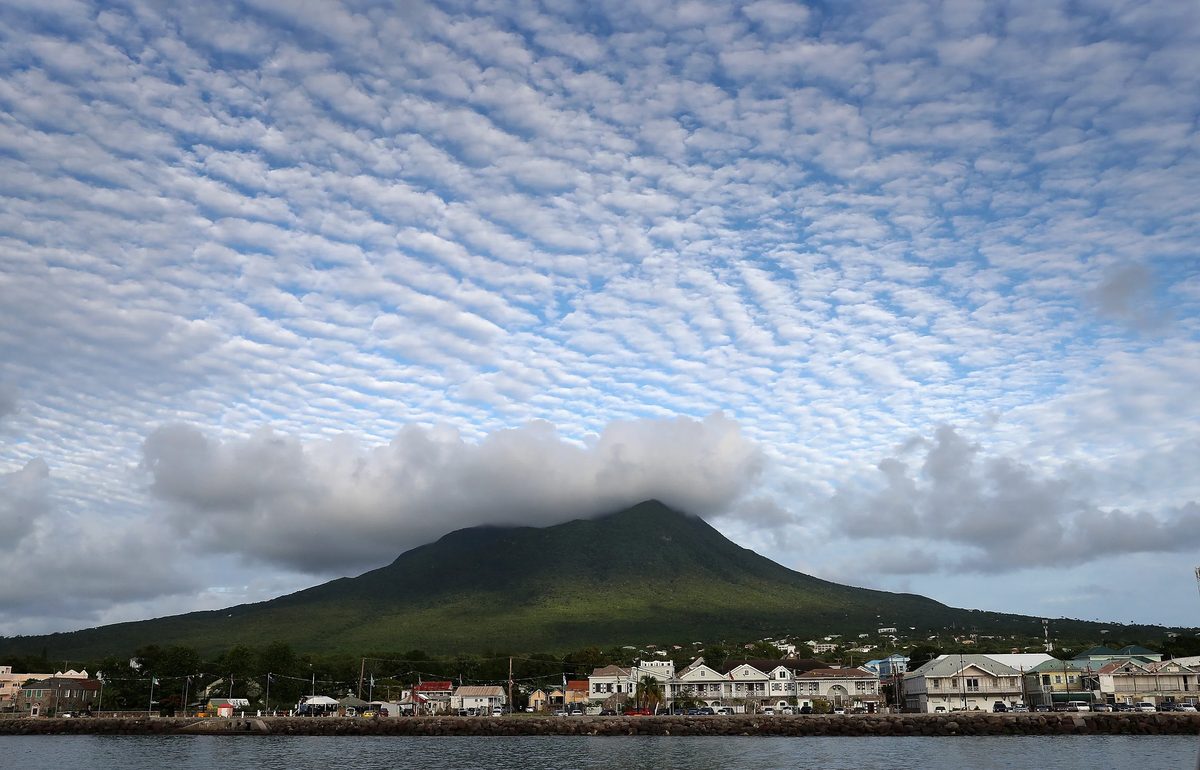
Nevis has always photographed beautifully. For the cameras, that has never been the hard part. The harder question has been what happens after the crew packs up, and whether a small island of about 13,000 people can turn a moment in the spotlight into something that lasts. The island's film story is now long enough to answer that question in part, and the answer is more encouraging than skeptics expected, though less settled than boosters sometimes say.
The story starts in 2020, when the pandemic had stalled tourism across the island. Filming offered a different kind of economic life. In December 2020, the Nevis Island Administration signed a multi-film production deal with a UK producer, MSR Media, and the first feature, One Year Off, went before the cameras in early 2021.
The first wave
The early numbers were encouraging. On February 22, 2021, Premier Mark Brantley told the public through a Nevis Island Administration release that 30 Nevisians had been hired full time, 11 more had been hired as actors with speaking roles, and 168 had been hired as supporting artistes. He added that some 46 non-nationals were now living on the island for the work. The release did not say whether the speaking and supporting roles were all Nevisian, so those figures are best read as a combined picture rather than a clean headcount.

The films themselves found their audiences. Lionsgate released One Year Off on digital and on-demand platforms in December 2022, with Philippe Martinez of MSR Media as director. Assailant and A Week in Paradise followed, and the Nevis Island Administration said in 2021 that the films had been sold to distributors. By August 2022, the government counted The Island as the seventh feature shot on the island. The island's Film Commissioner later put the total at nine over two years. The counts vary across the record, so the safest statement is that MSR's productions numbered in the high single digits.
Where did it go?
That is the question people on the island ask, and the answer has two parts. The first is that MSR's run of productions on Nevis has ended, according to Pamela Martin, the island's Film Commissioner, who told The Location Guide in July 2025 that the commission is now building a more sustainable, locally led industry. MSR's own account is different. In an interview with Screen Daily, Martinez said the company still shoots about four features a year on St. Kitts and Nevis under a deal with the government, employs roughly 50 people permanently, and runs an acting academy with 20 students. That interview is undated, so the two accounts cannot be fully reconciled from the public record, and anyone planning around the island's film future should keep that gap in view.

The second part is more encouraging. The film sector is broadening beyond a single anchor producer. OCTET Productions, a Washington, D.C. company, shot the romance feature St. Kissed on Nevis in September 2025, and its founders have said they want to return. Ninth House Films completed a location scout, and Premier Brantley said the company would come back in 2026 to shoot a romance feature starring Taye Diggs. Five16 Films was shooting a romance feature on the island in December 2025, and the Premier said that production created ten local speaking roles. PBS's Hometowns scheduled two international episodes filmed on the island for broadcast in February 2026.
The institutions have followed the activity. The Nevis Film Commission officially launched on June 22, 2025, at the Nevis Performing Arts Center, with a screening of the documentary Hamilton's America. Martin describes the commission as a single point of contact for producers, offering local incentive programs and operational help. Every production must include at least five locals on the crew, and the commission offers credits on accommodation and food. Nevis has no tax rebate, which the commission says is part of why it is working to build a film-friendly database of local talent and a production guide. In September 2025, the Premier put the mood plainly: "The film industry is thriving on the island."
What it means for tourism revenue
Here is the honest part. No public figure yet ties film spending directly to visitor arrivals or to tourism income on Nevis. The government has not published a total for production spending, and the commission's incentive amounts are not public. The closest measure available is the Tourism Development Levy, which tracks activity in the island's accommodation sector. In January 2026, levy receipts reached $774,733.15, up from $502,406.97 a year earlier. February 2026 came in at $769,404.52, against $383,429.38 in February 2025, and March 2026 reached $710,641.55, compared with $565,378.07. Premier Brantley called the trend "tremendous growth" and has described the levy as a reliable barometer of tourism performance.

There is a fair caveat. The levy rate was raised in 2025, and the Premier himself attributed part of the July 2025 increase to that change. Some of the gain reflects policy rather than new visitors, so the levy is a useful signal but not a clean measure of film's contribution. Wider context comes from the Eastern Caribbean Central Bank, which reported that St. Kitts and Nevis recorded 109,686 stopover visitors in 2024, up 5.0 percent, and 851,963 cruise passengers, up 10.0 percent. The federation's total visitor count reached 966,600, up 8.8 percent. Those figures cover the two islands together, and the bank's report does not split them. No published share of visitors from North America for Nevis alone has surfaced in the public record, and that is the number the tourism board would most usefully publish next.
A live story on stage
Film is not the only way Nevis is telling its stories to visitors. Greg Phillip, CEO of Nevis Sun Tours and a former CEO of the Nevis Tourism Authority from 2013 to 2019, is one of the island's leading voices on Alexander Hamilton and Horatio Nelson, two figures with real connections to Nevis. Hamilton was born on the island, and the story of Nelson's years here is part of the island's heritage as well. Phillip is also a dramatist and author, and the Nevis Historical and Conservation Board counts him among its members.

The Trial of Hamilton and Nelson is a 90-minute immersive theatrical experience. Visitors join the jury, examine historical evidence, hear the arguments and vote on the verdict. The Four Seasons Nevis lists it as a local experience at Malcolm Guishard Recreational Park, about a ten-minute walk from the resort. In a July 30, 2026 interview with Journeys of Discovery on KCBX, Phillip described it as a captivating mock trial, and he placed it among the island's cultural offerings, alongside food experiences and visits to historic sites such as St. Paul's Anglican Church. There is something special about a visitor who leaves a courtroom in the middle of a Caribbean afternoon with a strong opinion about two of history's most argued-over figures.
Why does this matter for the economy? A live product like this gives visitors a reason to stay another day, to eat in the villages, to book a room and to spend in the island's restaurants, taxis and tour desks. It also gives the film sector a companion. A visitor who has watched a movie shot on Nevis can step into the same streets for a live performance, so the island's history and its screen story reinforce each other. Public figures on ticket sales and prices have not been released, and the Four Seasons notes that tickets are non-refundable without stating a price. The revenue case is therefore still a promise to be measured. A ticket count from the operator would turn it into a number the island can plan around.
Looking ahead
The timing matters. The Vance W. Amory International Airport expansion, which broke ground on July 1, 2026, is planned to carry a 6,000-foot runway. If the 18-month timeline holds, the runway would be ready around early 2028. Better airlift would make Nevis easier to reach for film crews, tour operators and the visitors who come after the cameras leave, and that is the link between the island's screen story and its visitor economy.
The island has done something rare here. A small place with a modest budget built a film office, trained local crew, put Nevisians on screen and drew new productions from several countries. The next tests are continuity, a steady pipeline of work, a published spending figure, and visitor data that shows the screen effect reaching hotels, restaurants and tour desks. Nevis has every reason to be proud of the start. The rest of the story is still being written, and it is a good island to write it on.
Read more at The Caribbean Ledger ›