A UN Report Maps the Money Behind Haiti's Gangs as a December Vote Draws Near
Experts appointed by the UN Secretary-General describe a gang economy sustained by political and business patrons, even as the electoral council loosens the rules on who may run in the December 13 election.
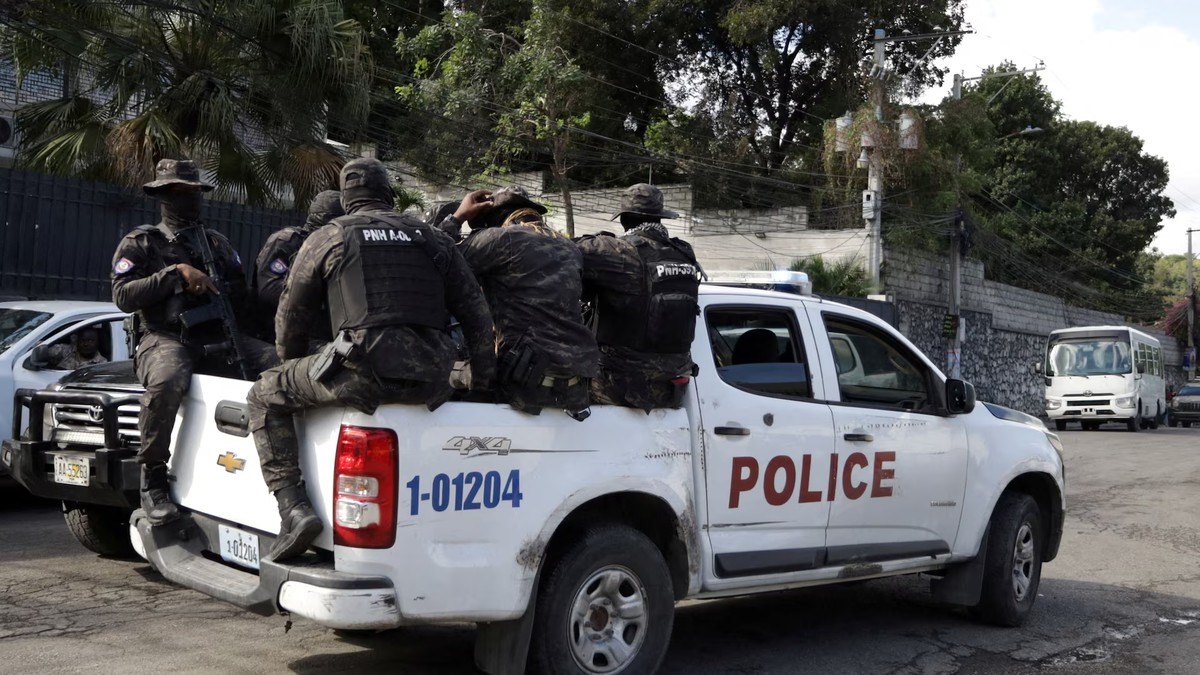
A 94-page report by experts appointed by the UN Secretary-General, compiled between October 2025 and July 2026, has set out in unusual detail how Haiti's armed groups are financed and why sanctions against them have failed to bite. The findings, reported by the Associated Press on October 8 in an account by Danica Coto, land as Haiti prepares for its first general election in a decade, scheduled for December 13.
The central conclusion is that the gangs endure not in spite of Haiti's elites but with their support. The report found that the Viv Ansanm alliance, formed in 2023, now shows what the experts called violent fractures, yet remains strong because political, economic and security actors continue to back it. The money trail the report follows is, in places, almost absurdly small. One account tied to a former lawmaker, Prophane Victor, held just 421 dollars. An account linked to a former palace security chief, Dimitri Herard, had 2.63 dollars frozen. Several gang leaders had nothing frozen at all. The point is not the size of the balances. It is that the sanctions machinery has barely touched the real flows.
The economics of recruitment
The report also puts numbers to how the gangs sustain their ranks. Children are recruited with roughly 1,000 dollars and a motorcycle, the experts found, and then paid between 114 and 190 dollars every two weeks, with an additional 500 dollars for what the report described as important combat operations. Two groups are reported to run all-female cells. In a country where formal employment has collapsed across much of the capital, those sums compete with anything the legal economy can offer, which is precisely the problem a security force alone cannot solve.
The report names specific figures. It accuses a former Kenscoff legislator, Alfredo Junior Antoine, of sponsoring a 2025 attack that killed more than 100 people; he denied the allegation by email. It accuses a former senator, Nenel Cassy, of running a criminal group in Miragoane; he has called the claim political persecution. The naming matters because it draws the line the report is most concerned with, the one between the men holding the guns and the men funding them.
A lower bar for candidates
Against that backdrop, Haiti's Provisional Electoral Council has made a decision that has drawn sharp criticism. The council has dropped the rule that required candidates to certify their assets were free of any freeze, the AP reported on October 9. Individuals under United Nations Security Council sanctions remain barred, and there are nine Haitians on that list, nearly all of them gang leaders. But figures sanctioned only by the United States, Canada or the European Union, among them former president Michel Martelly and former Senate head Youri Latortue, are not automatically excluded. Former prime minister Evans Paul criticized the change.
The practical effect is to widen the field. The candidate-registration deadline has been pushed to October 31, and more than 784,000 voters are enrolled in a country of more than 12 million. Preliminary, unofficial registration counts stand at 13 presidential candidates, 282 for the Senate, 929 for the lower house and 755 for mayoral posts, according to the AP's reporting.
The election and the force
The scale of the collapse the election is meant to begin reversing is hard to overstate. United Nations data cited in wire coverage recorded more than 5,500 people killed and over 1.4 million displaced in Haiti between March 2025 and the middle of January 2026, a toll that has hollowed out much of Port-au-Prince. It was that violence that prompted the Security Council, late last year, to authorize the Gang Suppression Force in the first place. The report released this month argues, in effect, that a security operation addresses the symptom. The financing it documents is the condition beneath it, and the people who supply the money have names and, in some cases, assets.
The vote is meant to arrive alongside a security effort that is still assembling. The UN Security Council authorized a 5,550-member Gang Suppression Force late last year to replace the Kenya-led mission, and the first foreign personnel, an advance team from Chad, arrived in April. The force is a fraction of its promised strength, a gap this newspaper and others have noted in recent weeks.
That is the vise Haiti enters the final weeks of 2026 inside. A security force not yet at scale is meant to create the conditions for a credible election, while a report with the UN's imprimatur argues that the deeper problem is not the men the force would fight but the patrons who pay them, some of whom the loosened candidate rules may now allow onto the ballot. An election can confer legitimacy. Whether it can be held safely, and whether the people financing the violence are kept off the ticket rather than ushered onto it, are the questions the next eight weeks will answer.
Read more at The Caribbean Ledger ›