Three Caribbean teams reach the Nations League last eight
Haiti, Curacao and the Dominican Republic came through the Concacaf Nations League group stage to reach the quarterfinals, with the Dominicans arriving as the region's surprise, and Trinidad and Tobago left to take the long road through a playoff.
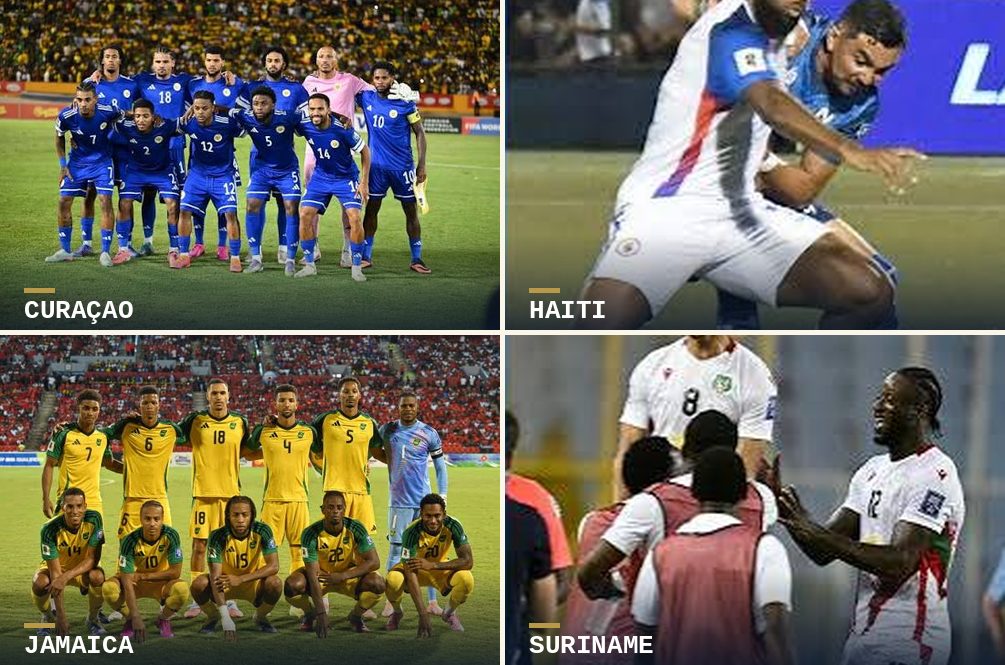
The October window of the Concacaf Nations League settled the top tier of regional football, and when it was done, three Caribbean nations had booked places in the quarterfinals of the confederation's premier team competition. Haiti, Curacao and the Dominican Republic all advanced from League A, the governing body confirmed, a strong return for a region whose football is too often measured only against the giants to its north. A place in the last eight of the Nations League is no small thing for any of them.
The decisive matches came on October 4. In Port of Spain, Trinidad and Tobago drew 1-1 with Curacao in front of a home crowd, a result that sent Curacao through to the quarterfinals and left Trinidad and Tobago to contest a playoff for a place at a later stage. In San Jose, Haiti lost 2-0 to Costa Rica but advanced regardless, having done enough earlier in the group to carry itself into the last eight. And in Managua, the Dominican Republic beat Nicaragua 2-1 to claim its own quarterfinal berth, per Concacaf's published results.
The Dominican story

Of the three, the Dominican Republic is the eye-catcher. The country's footballing identity has long been overshadowed at home by baseball, and its presence in the top tier of Concacaf competition is a recent and hard-won thing. Reaching a Nations League quarterfinal is the kind of result that reorders expectations, that fills a federation's inbox with questions about facilities and youth development, and that gives a generation of players proof that the ceiling is higher than the country assumed. The win in Managua was not a fluke of a single night. It was the end of a group campaign done well enough to leave no doubt.
Haiti's advancement carries a different weight. Haitian football has become, by necessity, a diaspora project, its national team drawn heavily from players raised in North America and Europe and its home fixtures long since displaced by the security situation at home. That a country unable to safely host its own matches keeps qualifying out of its group is a quiet act of endurance. For Haitians scattered across the region and beyond, the team is one of the few banners left to rally around, and it is still flying.
Curacao, the smallest of the three by population, continues to punch far above its size. The Dutch Caribbean island has built one of the region's most reliable programs, again leaning on a deep pool of players connected to the Netherlands, and the draw in Port of Spain was enough to carry it into the quarterfinals at Trinidad and Tobago's expense. For an island of its scale to keep reaching the business end of Concacaf competition is no longer a surprise so much as a model that larger territories study.

Trinidad and Tobago's longer road
For Trinidad and Tobago, the window ended in frustration. A home draw that sends the visitor through and leaves the host facing a playoff is the kind of narrow outcome that defines a campaign and feeds a familiar debate about a football nation that has slipped from the heights of its 2006 World Cup appearance. The Soca Warriors are not out of the wider picture, but they now face the longer, less forgiving route, with the margin for error gone.
There is a thread running through all three success stories worth naming, because it points to how the region's game is actually being built. Haiti and Curacao have leaned heavily on players developed abroad, in North America and the Netherlands, and the Dominican program has drawn on the same diaspora depth. That model has limits, and federations know it, because a team assembled from players raised elsewhere is only as durable as its ability to keep attracting them. But in the near term it is working, and it has delivered three Caribbean quarterfinalists where the old, purely domestic pathway rarely did.
The window reshuffled more than one bracket. Curacao's draw and the Dominican win pushed Nicaragua and Trinidad and Tobago toward a play-in route for the top tier, while Costa Rica, despite beating Haiti, dropped into the Gold Cup preliminary path, a reminder that in the Nations League's format a win on the night does not always buy the result a team wanted. The competition is built so that group performance, not a single match, decides who climbs and who takes the detour, and this October it rewarded the three Caribbean sides that had banked points early.
The quarterfinals are scheduled for the window of November 9 to 17, and the regional interest will be considerable. Three Caribbean teams in the last eight of the Nations League is a benchmark worth stating plainly, because the competition's results feed directly into seeding and qualification pathways that shape the region's road to the bigger stages, including the Gold Cup and the confederation's World Cup process. For a part of the world whose football rarely leads the back pages against cricket and athletics, it was a window that earned the space. The next one, in November, will show whether any of the three can turn a place in the last eight into something the whole region talks about.
Read more at The Caribbean Ledger ›