Trinidad and Tobago readies a budget for a week when oil is back above US$100
Finance Minister Davendranath Tancoo presents the national budget on October 12, into a crude price the country does not control and a gas problem no price can fix.
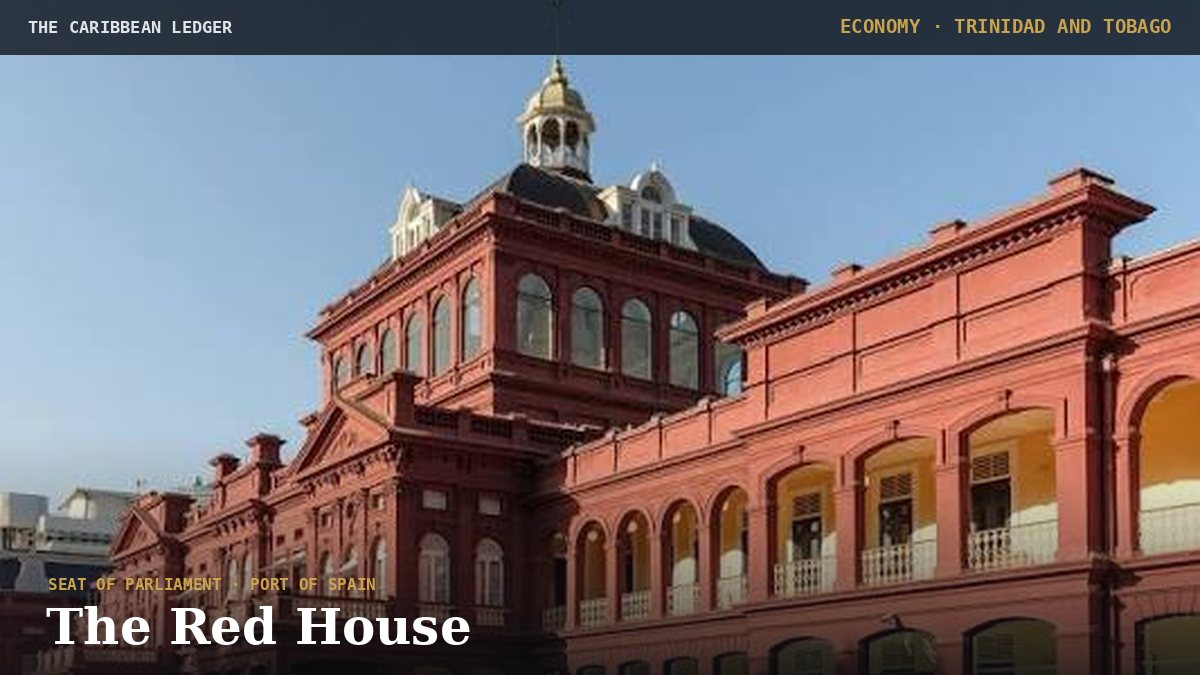
Trinidad and Tobago will present its national budget on Monday, October 12, at 1:30 in the afternoon, with Finance Minister Davendranath Tancoo delivering the statement in the House. The Office of the Prime Minister announced the date at the start of this month, and the Ministry of Finance confirmed it in a release headed National Budget Statement 2027, both dated around October 1. The timing places the region’s largest energy economy in front of its books in the same week that a global oil price has climbed back above a threshold it has not held in more than a year.
Brent crude traded at US$101.43 a barrel on the morning of October 6, according to Fortune’s market tracking, after briefly pushing past US$105 the prior day. The move was not the work of producers opening the taps. OPEC and its partners agreed on October 4 to hold November output steady, a second straight monthly pause, as CNBC and Reuters reported. The price is being driven by a risk premium tied to the Middle East rather than by any change in supply. For an exporter, the reason behind a high price matters less than the price itself when the budget is being written.
A windfall with an asterisk
On its face, crude above US$100 is good news for Port of Spain. Higher energy prices lift the government’s royalty and tax take, ease the foreign-exchange squeeze that has frustrated importers and manufacturers, and give a finance minister more room than he would otherwise have. Moody’s lifted its outlook on Trinidad and Tobago to stable at a Ba2 rating at the end of September, a modest vote of confidence that a budget can build on.
The asterisk is that Trinidad and Tobago is, first and foremost, a gas economy rather than an oil economy, and the constraint on gas is volume, not price. The country’s mature fields produce less than they once did, and the most promising additions to supply sit in cross-border reservoirs shared with Venezuela, where development depends on a diplomatic and sanctions picture that shifts with Washington’s mood. A crude price the country cannot influence helps the revenue line. It does not put more gas through the petrochemical plants and the liquefied natural gas trains that actually anchor the economy.
That is why the interesting part of Monday’s statement will not be the top-line revenue assumption but the posture behind it. The previous budget ran a deficit of about TT$3.865 billion under the theme “T&T First.” A government looking at a temporary price windfall has a familiar choice. It can treat the extra revenue as permanent and spend it, or it can treat it as a loan from a volatile market and bank some of it against the next downturn. Energy economies that have chosen the first path have a long history of regretting it when the price turns, and the price always turns.
The diversification question that never leaves
Every Trinidad and Tobago budget for two decades has promised to move the economy beyond hydrocarbons, and every one has been overtaken by the next move in the energy price. A high oil price is, perversely, the enemy of diversification, because it removes the urgency that a low price creates. The test of this budget will be whether it uses a moment of relative strength to fund the unglamorous work of broadening the economy, in agriculture, in services, in the digital sector, or whether it lets a good quarter for crude paper over the structural question for another year.
Trinidad and Tobago has an instrument built for exactly this moment. The Heritage and Stabilization Fund was created to catch energy revenue in the good years and release it in the lean ones, and a budget that directs part of a US$100 windfall into it, rather than into recurrent spending, would honor the purpose for which it was designed. The temptation runs the other way. Election cycles reward visible spending, and a sovereign fund that quietly accumulates is politically invisible until the year it is needed. The measure of fiscal seriousness on Monday will be how the minister treats the gap between those two impulses.
There is also the matter of the foreign-exchange shortage that households and businesses feel directly, in the difficulty of getting United States dollars for imports and travel. A stronger energy price should loosen that constraint at the margin, and a budget that channels some of the windfall toward rebuilding reserves rather than toward recurrent spending would do more for confidence than any single capital project.
Caribbean neighbors will read Monday’s statement with mixed feelings. For the oil and gas producers, Guyana and Suriname among them, a Trinidad budget written against US$100 crude is a preview of their own good fortune. For the importers across the Eastern Caribbean and the wider region, the same price that fills Port of Spain’s coffers is the one lifting their electricity bills and their pump prices. The budget that Tancoo reads on October 12 is a national document. The forces shaping it are regional, and for once they are pointing in Trinidad and Tobago’s favor.
Read more at The Caribbean Ledger ›